Sermon June 7th 2026

Come, Lord Jesus, Be Our Guest
June 7, 2026
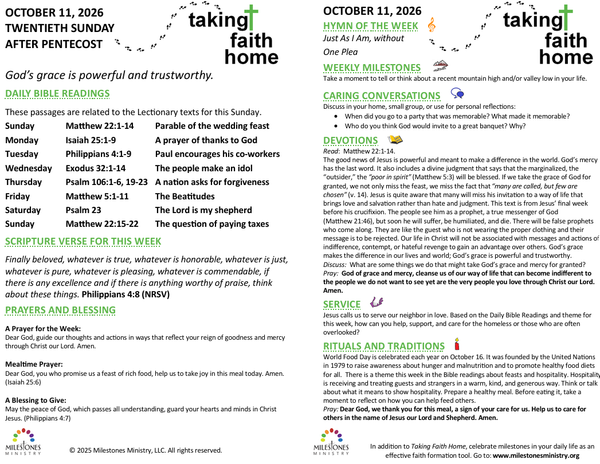
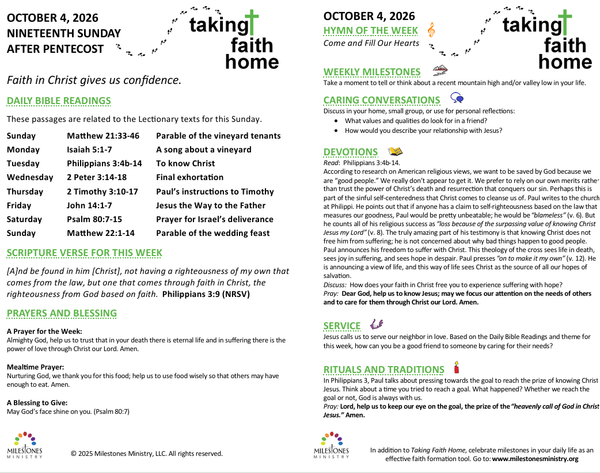
As I was growing up, my mother would often remind me to be careful in choosing my friends. “People will judge you by the company you keep,” she'd say. Does that sound at all familiar? No doubt you heard it, too. As the saying goes, “Birds of a feather flock together.” And when we see someone we know hanging out with questionable companions, we may lower our opinion of that person. We often judge others by the company they keep, so we shouldn't be all that surprised by the reaction of some of the Pharisees in today's Gospel when they noticed Jesus enjoying a meal at Matthew's place, surrounded by all of Matthew's friends.
If you consider the culture of that time, you'll understand how scandalous it was. Tax collectors were among the most despised people in society. Tax collectors were fiercely hated. Back then, a man got the job of tax collector by putting in a bid with the Roman government, promising to raise so much revenue. The job would go to the highest bidder, who would turn around and collect taxes from the general population to make good on his bid. And whatever he could collect over and above his bid was his to keep. So, whether it was accurate or not, the one who held the position of tax collector was considered the nastiest, most corrupt man in town. He was seen as a thief. He stole his wealth from the people. He wasn't just disliked; he was despised, like the one who betrayed everyone he grew up with.
And, would you believe it? This is the man to whom Jesus walks up and simply says, “Follow me.” It's shocking. Of all the faithful, God fearing people, why would Jesus choose the likes of HIM? (Well, maybe I should turn that around and ask, Why would the Lord choose the likes of ME?) But the most astonishing thing is what the sentence goes on to say—Matthew got up and followed him. It's almost as if this man—the one whom everyone in Capernaum had long ago written off—had been waiting all his life for the Savior's invitation.
Let the wonder of this moment sink in. Imagine the one person in your life whom you have thoroughly given up on. Is it a child who repeatedly lets you down? Is it a coworker whom you have concluded is hopeless? Or a public figure who makes your blood boil at the mere mention of his name? Now, just imagine seeing Jesus stepping up to that person and saying, “Come, I want you to join my team.” Does that thought upset you? Then you understand why it bothered the Pharisees.
Let's not be quick to judge the Pharisees; I find some of their characteristics in the man I see in the mirror. They were serious about their religion. They were devout. They consciously studied their Bible. They tithed. They did their level best to live faithfully to what they believed in their hearts pleased God. That's why their question may reveal something more about themselves than they would dare to admit. When they asked why Jesus was eating lunch with tax collectors and sinners, were they really asking, “Why's he not eating with US?”
The answer Jesus gives to their question comes directly from our first reading from Hosea. “Go and learn what this means—I desire mercy, not sacrifice.” It's interesting that he answers them with a scripture that went back 700 years. Jesus knew that the Pharisees were familiar with it. He knew they'd heard it before. There was nothing new to what Jesus was teaching. God has always been saying, “I'm not impressed with your worship and your sacrifices, if it doesn't change the way that you treat your neighbor.”
“Go and learn what this means—I desire mercy, not sacrifice. For I have not come to call the righteous, but sinners.” No sooner did he speak those words than came a sudden knock at the door. It was almost as if it had been part of a plan, because what followed turned out to be an actual demonstration of what he had spoken. A leader of the synagogue, desperate for mercy. His child has just died, and he falls to his knees before Jesus and begs him to come. “If you will but lay your hand on her, I know she will live.”
On the way, a woman, suffering for 12 years from a discharge of blood. But the bleeding is only part of her story. In that culture her condition was considered unclean...untouchable. For 12 years she was ritually unclean. For 12 years, kicked to the curb of society, written off...Just like Matthew.
Two very different people...one, a pillar of society...the other, practically invisible, written off by society. But to Jesus there is no difference between the two. Both come to him with nothing in their hands but need.
The saddest part of this gospel is the Pharisees. They, too, desperately needed the mercy of God that Jesus offered. But they were too proud...too full of themselves... to admit it.
So I leave with you this one thought. Later today you will sit down to enjoy a meal, and you will first bow your head and pray, “Come, Lord Jesus, be our guest, and let these gifts to us be blest.” Come, Lord Jesus, be our guest! Next time you utter these words, remember the time that Jesus was a guest at the table of a tax collector. Isn't it awesome, that the creator of the universe, the Son of God, the Lord of hosts, would come and be your guest.
All praise and glory to God, who sent his Son to be the healer of our souls. My friend, can there be anything more astounding than this, that God is not ashamed to call us his friends. Amen.
Pr. Dale Henderson